
Crypto Casinos in the UAE: Licences, Risks and Brands
Crypto casinos are online casinos that take deposits and pay winnings in cryptocurrencies such as Bitcoin, USDT and Ethereum. The biggest names searched from the UAE — Stake, Rainbet, BC.Game, Roobet, Gamdom and BitStarz — hold licences from Curaçao or Anjouan, not from the UAE.
None of them is licensed by the GCGRA, the federal gambling regulator, so playing at a crypto casino from the UAE is unlicensed gambling under UAE law, whatever the casino’s own terms say.
This page explains how crypto casinos work, who runs the brands UAE players look for, what their licences do and do not cover, how “provably fair” games and crypto bonuses really work, and what the risks are for someone in the UAE. The brand details come from each casino’s own terms and footer, read on 19 October 2026. For the step-by-step of sending and withdrawing crypto — networks, tags and test transfers — see our casino payments guide. Last updated: 21 October 2026.
Crypto Casinos at a Glance
| Item | Details |
|---|---|
| What they are | Online casinos where your balance is funded and paid out in cryptocurrency |
| Coins usually accepted | BTC, USDT, USDC, ETH, SOL, LTC, XRP, TRX, DOGE and others |
| Typical licences | Curaçao Gaming Authority or the Government of Anjouan (Comoros) |
| GCGRA-licensed crypto casinos | None |
| Only licensed online casino in the UAE | Play971, funded in dirhams — see our Play971 guide |
| Legal position for players in the UAE | Unlicensed gambling — an offence under Article 461 of the Crimes and Penalties Law |
| Identity checks | All the big brands reserve the right to full KYC, usually triggered at withdrawal |
| Main practical risks | Irreversible transfers, price swings, frozen accounts, no UAE route for complaints |
What Is a Crypto Casino?
A crypto casino is an online casino whose cashier works in cryptocurrency. Instead of a card payment, you send coins from a wallet or exchange to a deposit address the casino gives you; instead of a bank transfer, your winnings are sent to a wallet address you provide. Many show your balance in dollars or let you switch the display to dirhams, but the money moving in and out is crypto.
Beyond the cashier, crypto casinos tend to share a few features that set them apart from traditional online casinos:
- In-house “originals”. Simple games built by the casino itself — Crash, Dice, Plinko, Mines, Limbo — sit next to slots and live tables from the usual studios.
- “Provably fair” claims. The originals usually publish a cryptographic method that lets you check each result after the round. We explain below what that does and does not prove.
- Rakeback and VIP programmes instead of, or alongside, classic deposit bonuses.
- Quick sign-up. An email address is often enough to open an account and deposit — but, as their terms show, not necessarily enough to withdraw.
- Streaming and community marketing. Several of the largest brands are promoted mainly through live streamers, sponsorships and social media rather than search ads.
Some casinos accept both crypto and cards; others are crypto-only. What makes a site a “crypto casino” in practice is that crypto is the main way money gets in and out.
Are Crypto Casinos Legal in the UAE?
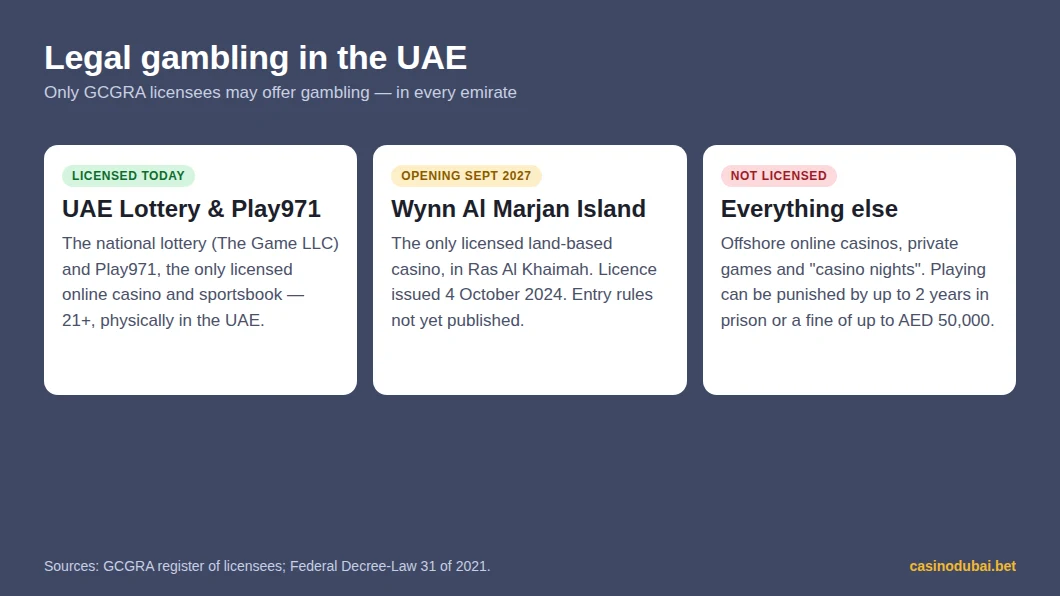
No. In the UAE, gambling is legal only through operators licensed by the General Commercial Gaming Regulatory Authority (GCGRA). Its register lists one online operator — Coin Technology Projects LLC, which runs Play971 — and Play971 is not a crypto casino: accounts are verified with an Emirates ID and funded in dirhams through bank cards in the player’s own name and the Botim Money wallet, which can be topped up with Apple Pay, Google Pay, a card, a bank account or cash at a kiosk.
Every crypto casino available from the UAE is therefore an offshore operator. Outside the licensed system, the federal Crimes and Penalties Law (Federal Decree-Law No. 31 of 2021) still applies: Article 461 punishes whoever gambles with up to two years in prison or a fine of up to AED 50,000, and Article 462 punishes whoever runs gambling with up to ten years and a fine of at least AED 100,000. Paying in crypto instead of dirhams changes nothing in that analysis. Our UAE gambling laws guide sets out the full framework.
Two things often confuse UAE players:
- “The UAE isn’t on the casino’s restricted list.” True for several brands below — but a casino’s list of countries it refuses is a business decision, not a legal permission. The terms of Stake, Rainbet, Gamdom and BitStarz all put the responsibility on the player to make sure gambling is legal where they are.
- “Crypto is legal in the UAE.” Owning and trading virtual assets through licensed providers is legal. Using them to gamble with an unlicensed operator is not, and using foreign stablecoins to pay for services in the UAE is restricted on its own terms, as the next section explains.
UAE Crypto Rules That Matter for Gambling
Crypto casinos sit where two sets of UAE rules meet: gambling law and the rules on virtual assets and payments.
| Rule | Who issues it | What it means for crypto gambling |
|---|---|---|
| Payment Token Services Regulation (2024) | Central Bank of the UAE | Only dirham payment tokens issued under a Central Bank licence may be used to pay for goods and services. Foreign stablecoins such as USDT may be used as a means of payment only to buy virtual assets. |
| Virtual asset licensing | VARA in Dubai, the FSRA in Abu Dhabi Global Market, and the Securities and Commodities Authority federally | UAE exchanges and brokers are licensed and supervised; they apply anti-money-laundering checks to where funds come from and where they go. |
| Anti-money-laundering law (Federal Decree-Law No. 10 of 2025, Cabinet Resolution No. 134 of 2025) | Federal government; the GCGRA supervises gaming licensees | Licensed gaming operators must check customers for transactions of AED 11,000 or more. Offshore casinos are outside this system, which is exactly why exchanges may question transfers coming from them. |
| Crimes and Penalties Law | Federal | Unlicensed gambling is an offence, whatever the payment method. |
In practice, the friction shows up at the exchange. A UAE-licensed exchange that receives coins from a gambling wallet may ask where the funds came from, delay the credit or close the account. Our payments guide covers how exchanges handle incoming transfers and why records matter.
The Crypto Casinos UAE Players Search For
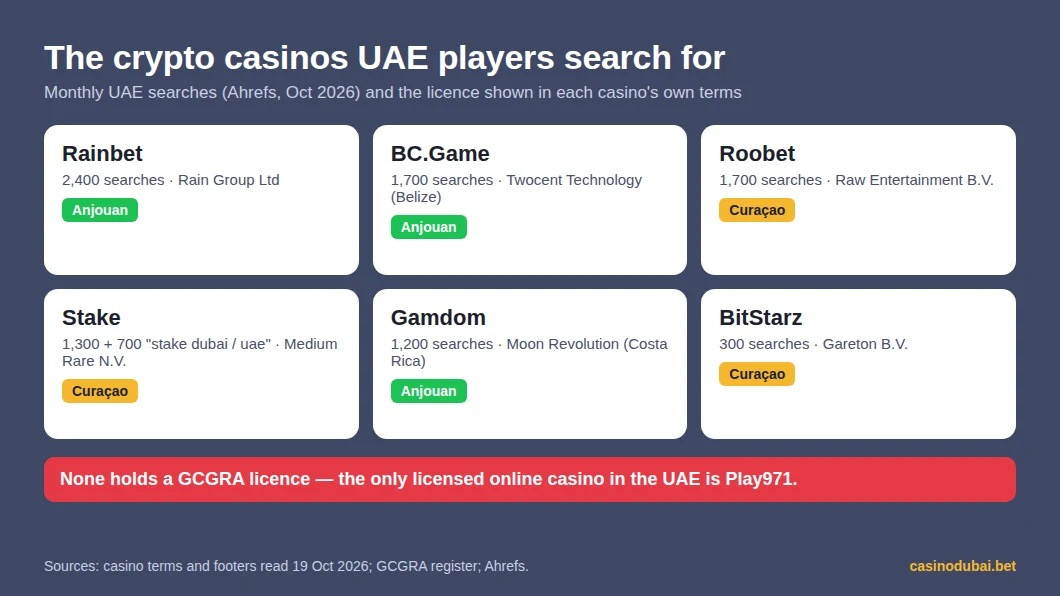
These are the crypto casino brands with the most searches from the UAE, according to Ahrefs data for October 2026. The operator and licence details are taken from each casino’s terms of service or footer, read on 19 October 2026. Listing a brand here is not a recommendation: none of them holds a UAE licence. Stake, Rainbet, Gamdom and BitStarz do not list the UAE among the countries they refuse — which, as explained above, is their commercial choice and not a legal permission.
| Brand | Monthly UAE searches | Operator | Licence |
|---|---|---|---|
| Rainbet | 2,400 | Rain Group Ltd (Anjouan, reg. 16077) | Anjouan |
| BC.Game | 1,700 | Twocent Technology Limited (Belize, reg. 41939) | Anjouan, ALSI-202410011-FI1 |
| Roobet | 1,700 | Raw Entertainment B.V. (Curaçao, reg. 157205) | Curaçao, OGL/2024/687/0427 |
| Stake | 1,300 for “stake casino”, plus 400 for “stake dubai” and 300 for “stake uae” | Medium Rare N.V. (Curaçao) | Curaçao Gaming Authority, OGL/2024/1451/0918 |
| Gamdom | 1,200 | Moon Revolution Limitada (Costa Rica) | Anjouan, ALSI-152406043-FI |
| BitStarz | 300 | Gareton B.V. (Curaçao, reg. 160656) | Curaçao Gaming Authority, OGL/2024/165/0185 |
All six hold licences from Curaçao or Anjouan; none holds a GCGRA licence, so none of them is legal for players in the UAE.
Stake
Stake is one of the best-known crypto casinos and sportsbooks, and “stake dubai” and “stake uae” are among the most common crypto gambling searches in the country. It is owned by Medium Rare N.V., based in Curaçao and licensed by the Curaçao Gaming Authority, with payment processing handled by subsidiaries in Cyprus. Its terms list more than forty “Prohibited Jurisdictions” — including the UK, the US, Israel, Iraq and Iran — but not the UAE. Its terms add, though, that Stake will not accept registration from people “residing in jurisdictions from where it is illegal or gambling is not permitted”, and that “it is the User’s responsibility to ensure that their use of the Service is lawful” — which, for someone in the UAE, it is not. They also say that using a VPN or proxy to disguise your location is a breach of the agreement, that you must wager 100% of a deposit before requesting a crypto withdrawal, and that Stake may ask for KYC documents “at any time” and restrict withdrawals until your identity is established. Complaints go to CADRE B.V., a dispute service, or to the courts of Curaçao — not to any UAE authority.
Rainbet
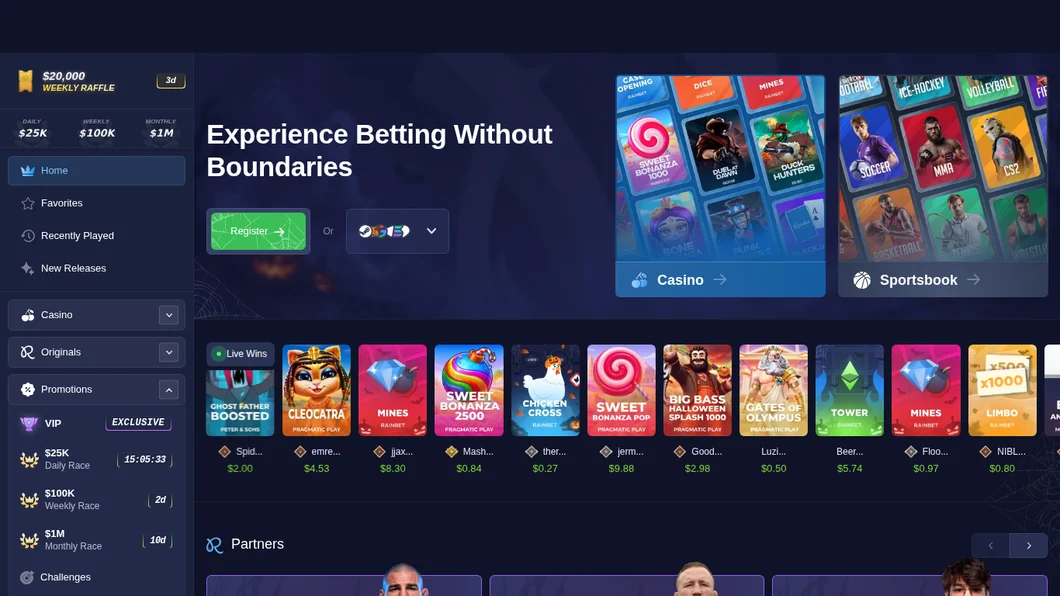
Rainbet has the most UAE brand searches of the six brands in the table. It is owned by Rain Group Ltd, registered and licensed in Anjouan, an autonomous island of the Union of Comoros. Its restricted countries include the US, France, the Netherlands, Australia, Austria, Germany, the UK and Spain; the UAE is not on the list. The terms say crypto deposits carry a “1x wager lock” — you must play the deposit through once before withdrawing it — that Rainbet can restrict withdrawals if identity verification is not completed within 72 hours of a request, and that VPNs are not allowed.
BC.Game
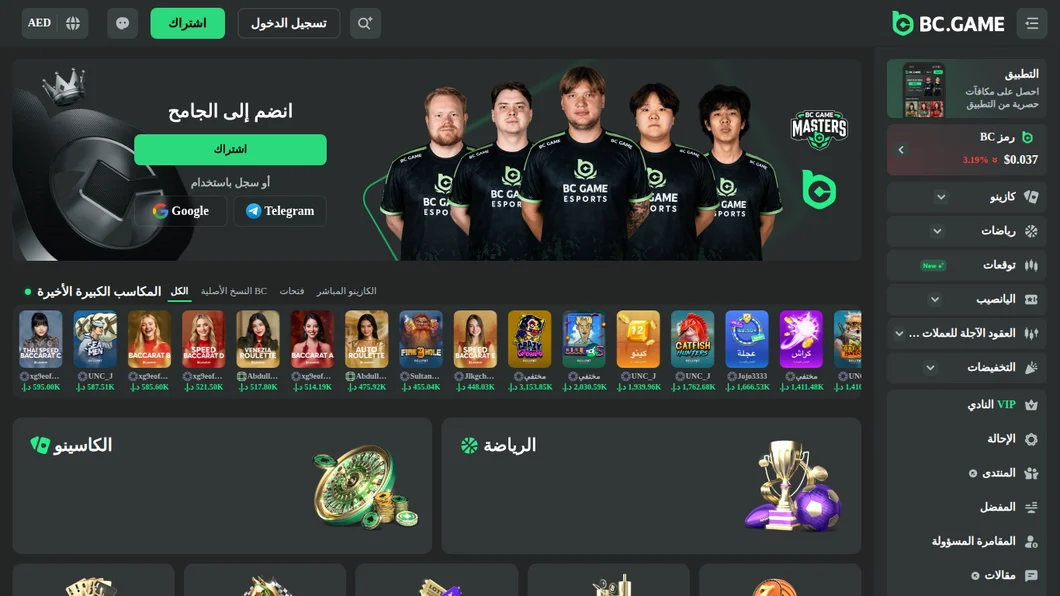
BC.Game is operated by Twocent Technology Limited, a company registered in Belize, under a licence from the Government of the Autonomous Island of Anjouan. When we opened it from a UAE connection, the site loaded in Arabic with balances shown in dirhams — a sign of how directly it targets Gulf players. Its footer also points out that its crypto trading features are “not gambling by definition” and are not covered by its gaming licence.
Roobet
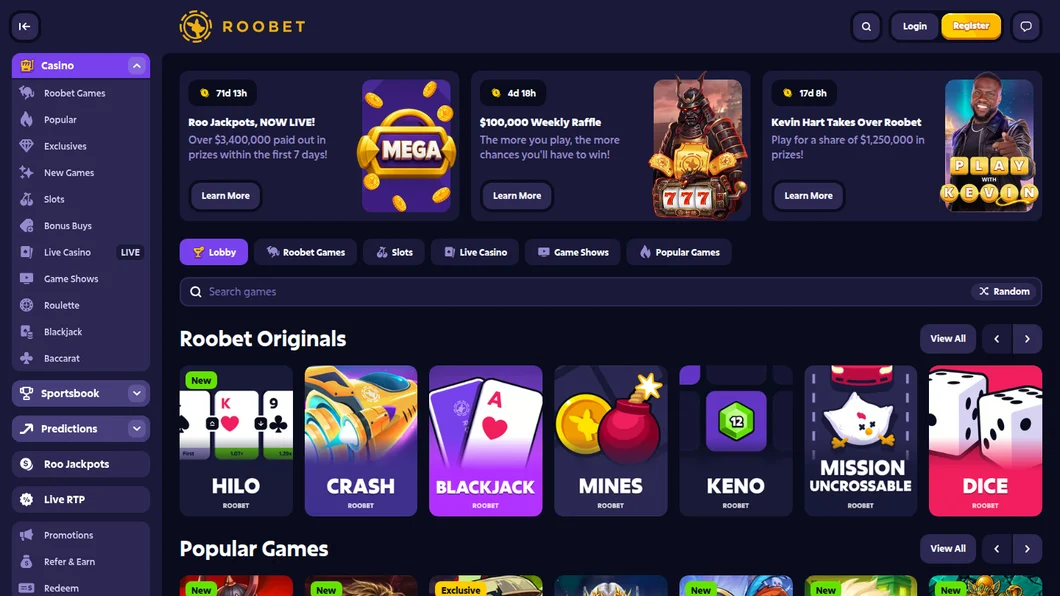
Roobet is a brand of Raw Entertainment B.V., registered in Curaçao and licensed there under OGL/2024/687/0427, with a Cyprus company acting as its paying agent. Its footer lists Bitcoin, USDT, USDC, Ethereum, Solana, Sui, BNB, XRP, TRON, Litecoin and Dogecoin among accepted currencies, and it is promoted heavily through streamers and sports sponsorships.
Gamdom
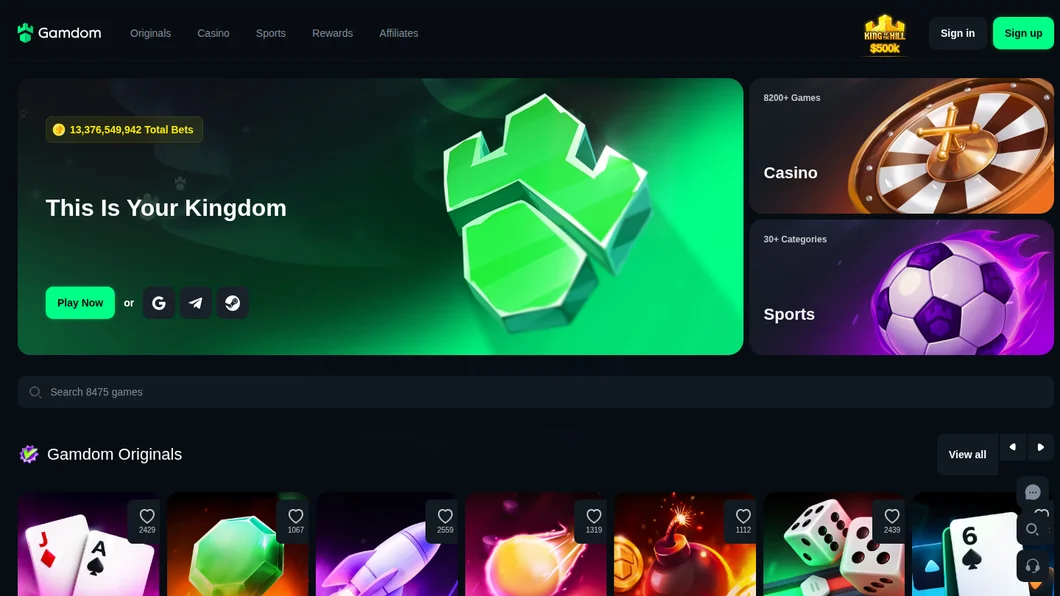
Gamdom is run by Moon Revolution Limitada, a Costa Rican company, under an Anjouan licence. Its terms refuse players in more than thirty countries, mostly in Europe plus the US and Australia, but not the UAE. They state that KYC checks may be carried out “at any time”, especially when financial thresholds are reached, and may include source-of-funds documents as well as ID and proof of address.
BitStarz
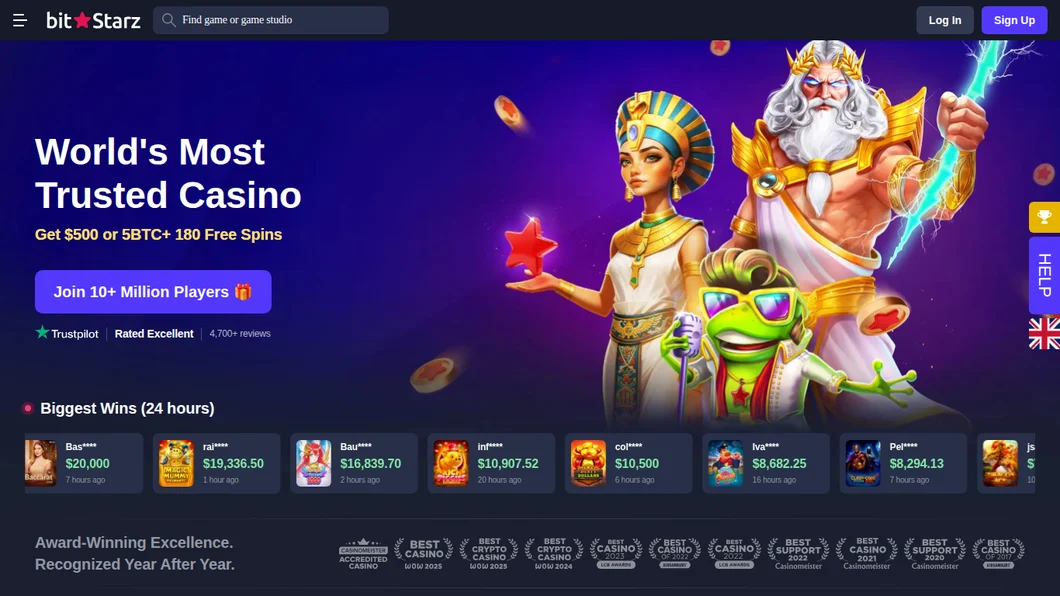
BitStarz is one of the older crypto-friendly casinos and accepts both crypto and traditional money. It is managed by Gareton B.V. in Curaçao under licence OGL/2024/165/0185. Its Restricted Countries Policy is long — it covers the UK, the US, France, Israel, Pakistan, Lebanon, Iraq and many more — and does not include the UAE, but it says the casino “cannot guarantee successful processing of withdrawals” if a player breaches it, and that using a VPN to bypass a game provider’s block may lead to winnings being confiscated.
Curaçao and Anjouan Licences Explained
Almost every crypto casino holds one of two licences. They are real licences, but what they offer a player in the UAE is limited.
| Item | Curaçao | Anjouan | GCGRA (UAE) |
|---|---|---|---|
| Who issues it | Curaçao Gaming Authority | Government of the Autonomous Island of Anjouan, Union of Comoros | General Commercial Gaming Regulatory Authority |
| Licence format | OGL/2024/… | ALSI-… | Listed on the GCGRA register |
| Current regime | National Ordinance on Games of Chance (LOK), in force since 24 December 2024 | Offshore licensing | Federal law since 2023 |
| Players it targets | International | International | People in the UAE |
| Makes play legal in the UAE? | No | No | Yes |
| Complaint route for UAE players | Casino’s chosen dispute service or the Curaçao authority | The Anjouan licensing body | The GCGRA |
Curaçao reformed its system in late 2024. Under the old model, four private “master licence” holders issued sub-licences to hundreds of casinos with little oversight. The new National Ordinance on Games of Chance, in force since 24 December 2024, abolished that model: the Curaçao Gaming Authority now licenses operators directly, which is why the brands above show licence numbers beginning “OGL/2024”. Anjouan licences, with numbers beginning “ALSI”, have become a common alternative for crypto brands.
For a UAE player, the important point is the last two rows of the table. A foreign licence means an operator answers to a foreign regulator for the markets it is allowed to serve. It does not authorise taking bets from the UAE, and if something goes wrong, there is no UAE body you can complain to.
How Provably Fair Works
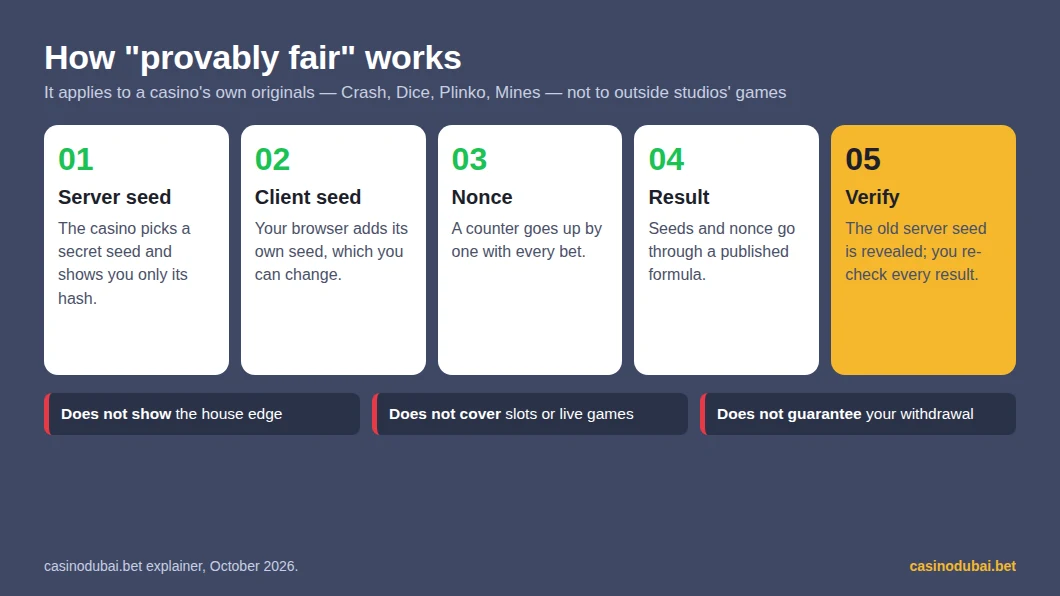
“Provably fair” is the crypto casino answer to the question “how do I know the game isn’t rigged?”. It applies to the casino’s own originals, not to slots and live games from outside studios, which rely on the studios’ own testing.
01
The casino commits to a secret. Before you play, it generates a random “server seed” and shows you only its hash — a fingerprint that cannot be reversed but will prove later that the seed was not changed.
02
You add your own input. Your browser supplies a “client seed”, which you can usually edit, so the casino cannot know in advance the full input that decides the result.
03
Each bet adds a counter. A “nonce” increases by one with every round.
04
The result is calculated from the server seed, client seed and nonce using a published formula.
05
You check it afterwards. When you change seeds, the old server seed is revealed. You can hash it to confirm it matches what you were shown, and recalculate every result with an independent verifier.
What this proves is narrow but useful: that a given result came from the published formula and was not altered after your bet. It does not tell you the house edge, which is set by the game’s payout table; it does not cover outside studios’ games; and it says nothing about whether the casino will pay a withdrawal. A provably fair game at an unlicensed casino is still a game at an unlicensed casino.
Crypto Casino Games
A crypto casino lobby usually has three parts:
| Type | Examples | Who makes them | Fairness checked by |
|---|---|---|---|
| Originals | Crash, Dice, Plinko, Mines, Limbo, Keno | The casino itself | The casino’s provably fair system |
| Slots | Thousands of titles | Outside studios such as Pragmatic Play, Hacksaw, Nolimit City | The studio’s certification, where it exists |
| Live casino | Roulette, blackjack, baccarat, game shows | Live studios such as Evolution and Pragmatic Play Live | The studio and its regulators |
The originals are where crypto casinos differ most. They are fast — a Dice or Limbo round takes a second — and most let you set auto-bets that run hundreds of rounds without a click. That speed is the main reason losses add up faster than at a traditional table. Each original shows its rules and payout in an info panel; read it before you play, and compare with the house edge of classic games in our casino games guide. If you prefer roulette, our online roulette guide explains the odds of each wheel.
Crypto Casino Bonuses and Rakeback
Crypto casinos advertise differently from traditional ones. Instead of a single big welcome offer, many push ongoing rewards:
- Rakeback — a small share of the house’s expected profit on your bets returned to you, often daily or weekly.
- VIP and level-up rewards — bonuses unlocked as your total wagering grows.
- Races and raffles — prize pools shared between the players who wager the most over a period.
- Deposit match bonuses — the classic offer, with wagering requirements.
All of these are paid for by wagering. Rakeback on a game with a 1% house edge returns a fraction of that 1%, so you are still expected to lose the rest; races reward the players who bet the most. Read the terms as well as the banner. Two examples from the terms above show how crypto deposits themselves can carry conditions: Stake requires you to wager 100% of a deposit before requesting a crypto withdrawal, and Rainbet applies a “1x wager lock” to crypto deposits. Our casino bonuses guide explains wagering requirements in detail.
“No KYC” Crypto Casinos: The Reality
“No KYC” is one of the most common claims in crypto casino marketing, and it is misleading. Opening an account with just an email address is often possible. None of the big brands promises in its terms that you can withdraw without ever being asked for ID:
| Brand | What its terms say about identity checks |
|---|---|
| Stake | May ask for any KYC documents “at any time” and restrict payments or withdrawals until identity is “sufficiently determined”; may carry out additional KYC for any withdrawal |
| Rainbet | May ask for KYC at any time; can restrict withdrawals and access to funds if verification is not completed within 72 hours; may request a selfie or a verification call |
| Gamdom | Checks may be run at registration or later, “especially when specific financial thresholds are met”, and may include source of funds |
| BitStarz | Can suspend or close accounts and withhold winnings if it suspects a breach of its terms, including its restricted countries policy |
The pattern is the same everywhere: the check comes when you ask for money out, and at that point the casino holds your balance. If your documents show a UAE address, the casino knows exactly where you are playing from. Treat “no KYC” as “KYC later”.
Crypto Casino vs Card Casino vs Play971
| Item | Offshore crypto casino | Offshore card casino | Play971 |
|---|---|---|---|
| Licence | Curaçao or Anjouan | Usually Curaçao, Malta or similar | GCGRA |
| Legal for players in the UAE | No | No | Yes, for adults 21+ who are physically in the UAE |
| Currency | Crypto, often shown in USD | USD, EUR, sometimes AED | AED |
| Can a payment be reversed? | No — blockchain transfers are final | Sometimes, through your bank | Through UAE payment channels |
| Price risk | Yes, unless you use a stablecoin | Currency conversion only | None |
| Identity checks | Light at sign-up, full at withdrawal | Usually at withdrawal | Emirates ID before any deposit |
| Complaints | Foreign dispute service or regulator | Foreign regulator | GCGRA |
| Player protection tools | Varies by brand | Varies by brand | Deposit limits, time-outs, self-exclusion of at least six months |
Play971 is the only option in the table that is legal for players in the UAE, and the only one where a complaint goes to a UAE regulator.
The Risks of Crypto Casinos for UAE Players
Beyond the legal position, crypto adds risks of its own to offshore gambling:
- No way back. A blockchain transfer to the wrong address or network is usually lost. There is no chargeback, and the casino is not obliged to recover it.
- Winnings depend on the casino’s terms, not a regulator. Every brand above reserves the right to void bets, withhold balances or close accounts if it believes its terms were broken — including its VPN and location rules.
- Price swings. If you deposit Bitcoin and the casino converts it to dollars, a price move between deposit and withdrawal changes how much coin you get back. Stablecoins reduce this risk but bring their own, including the UAE’s restrictions on foreign payment tokens.
- Exchange problems. UAE exchanges must apply anti-money-laundering checks. Funds arriving from a gambling wallet can be questioned, delayed or rejected.
- No UAE complaint route. The GCGRA warns that players at unlicensed operators have no legal recourse for unfair treatment or non-payment.
- Faster losses. Instant deposits, one-second games and auto-bet make it easy to lose track of spending, especially when the balance is shown in a coin rather than in dirhams.
Crypto Casino Scams to Avoid
Crypto’s speed and anonymity attract fraud as well as gambling. These are the patterns to watch for:
- Clone sites. Copies of well-known brands on look-alike domains take deposits and never pay. Bookmark the address you use, and be wary of links from messages or comments.
- “Investment” casinos. Schemes that present a casino or betting platform as an investment with guaranteed returns — often introduced by a new online friend or “mentor” — are a form of investment fraud, not gambling.
- Telegram and WhatsApp agents. People offering to deposit for you, sell accounts or “guaranteed” betting tips are not casino staff.
- Withdrawal “fees”. A site that asks you to send more crypto to “unlock” a withdrawal, pay a “tax” or “verify your wallet” is a scam.
- Recovery scams. After a loss, “fund recovery” firms promise to get your crypto back for an upfront fee. Blockchain transfers cannot be reversed by a third party.
- Seed phrase requests. No casino, exchange or support agent ever needs your wallet’s recovery phrase.
If you have been defrauded, report it to the police through your emirate’s official channels and keep the transaction IDs, wallet addresses and messages.
How to Check a Crypto Casino
01
Find the operator. Scroll to the footer: a real casino names the company that runs it, its registration number and its licence. No company name is a reason to leave.
02
Check the licence with the regulator. Search the licence number on the Curaçao Gaming Authority’s or Anjouan’s public register rather than trusting a badge.
03
Read the restricted countries list in the terms, and the clauses on VPNs, KYC and withdrawals.
04
Check the crypto conditions. Look for wager locks on deposits, minimum withdrawals and network fees.
05
Remember the UAE position. Whatever the checks show, no crypto casino is licensed by the GCGRA. The only licensed online casino in the UAE is Play971.
How We Review Crypto Casinos
We do not rank crypto casinos as “safe” or “legal” for UAE players, because none is licensed here. When we cover a brand, we report what can be checked: who owns it, which licence it holds and from whom, what its terms say about restricted countries, identity checks, VPNs and crypto withdrawals, and how the site behaves when opened from the UAE. We read terms and footers on the casino’s own website, never on third-party sites, and we date every check, because offshore brands change owners, licences and domains often. Our GCGRA guide explains how to check a UAE licence.
Play Responsibly
Crypto makes money feel abstract. A balance of 0.002 BTC or 150 USDT does not register the way AED 550 does, and that is part of why crypto gambling can get out of hand. If you gamble, decide your limit in dirhams before you start, keep a record of every deposit, and never gamble with coins you hold as savings or that you have borrowed. Stop if you find yourself chasing losses or hiding your spending. Confidential help is available from BeGambleAware.
FAQ
- Are crypto casinos legal in the UAE?
No. Only operators licensed by the GCGRA can offer gambling in the UAE, and none of them is a crypto casino. Playing at an offshore crypto casino from the UAE is unlicensed gambling under the Crimes and Penalties Law.
- Is Stake legal in Dubai?
No. Stake is licensed in Curaçao, not by the GCGRA. The UAE is not on Stake’s list of prohibited countries, but that is the company’s own policy, not a UAE permission.
- What is the best crypto casino in the UAE?
There is no licensed crypto casino in the UAE. The only licensed online casino is Play971, which is funded in dirhams.
- Does Play971 accept crypto?
Play971 accounts are funded in dirhams through bank cards in the player’s own name and the Botim Money wallet, which can be topped up with Apple Pay, Google Pay, a card, a bank account or cash at a kiosk. Our Play971 guide covers its payment methods.
- Are there really no-KYC crypto casinos?
Not in practice. The large brands let you sign up with an email, but their terms allow them to demand ID, proof of address and source of funds before paying a withdrawal.
- Is a Curaçao licence valid in the UAE?
No. A Curaçao or Anjouan licence lets an operator serve markets those authorities allow. It does not authorise gambling in the UAE.
- What is provably fair?
A system that lets you verify, after each round, that a casino’s in-house game result came from a published formula and was not changed. It does not show the house edge or guarantee payouts.
- Can I use a VPN to play at a crypto casino?
The casinos above forbid it in their terms and can void winnings or close accounts if they detect it. It also does not change the legal position in the UAE.
- Is USDT better than Bitcoin for casino payments?
USDT avoids most price swings because it tracks the dollar, but you must use the right network. Under UAE rules, foreign stablecoins may be used as payment only to buy other virtual assets.
- Do I pay tax on crypto casino winnings in the UAE?
The UAE has no personal income tax, but that does not make the winnings legal, and your exchange may ask where the funds came from.